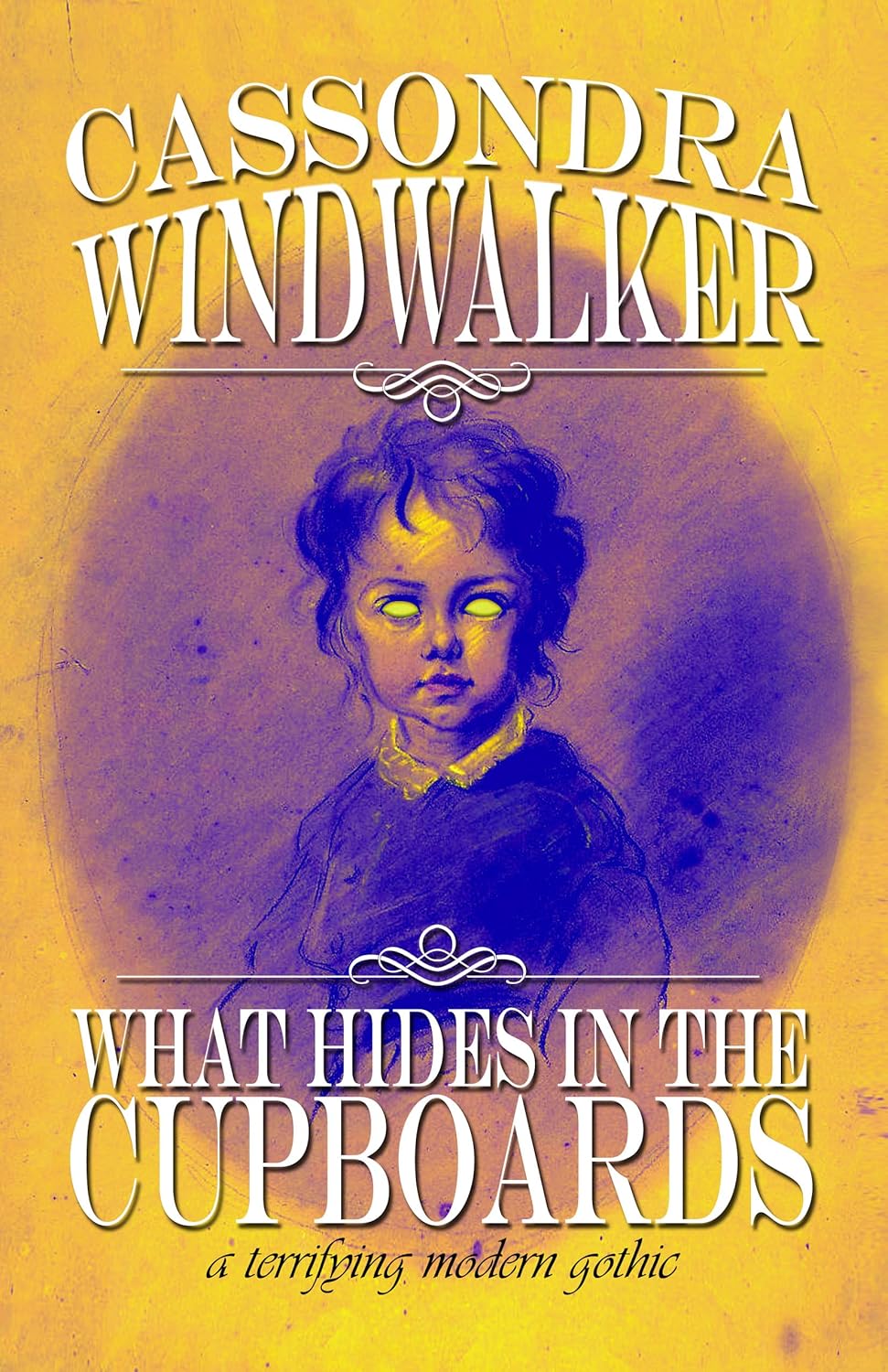
I don’t have a vote for the Bram Stoker Awards, but if I had one, I’d nominate What Hides in the Cupboards by Cassondra Windwalker as the best novel I read in 2024. As 2025 begins and I look back on the previous year, Windwalker’s gothic tale set in the New Mexico desert is the one that stood out the most.
Released in January 2024 by Unnerving Books, What Hides in the Cupboards has 14 reviews with a 4.4 (out of 5) rating on Amazon plus an additional 32 reviews with a 4.3 rating on Goodreads as I write this. One of the Amazon reviews is mine, and it reminded me of how much the novel impressed me at the time. After finishing it, I immediately thought, “That may be one of the best novels I’ll read in 2024.”
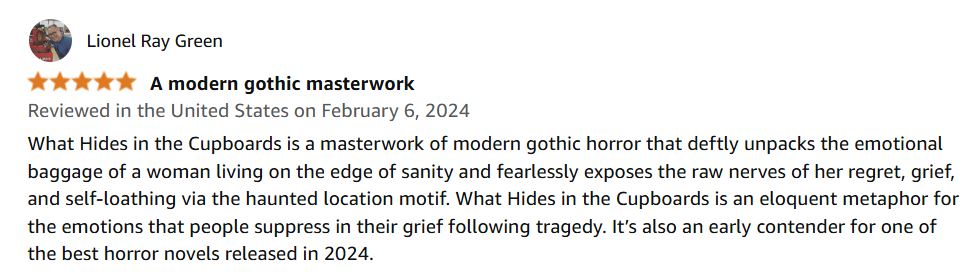
I’m as surprised as anyone that this is my favorite book from 2024 because I rarely read gothic horror, preferring the action of cryptid horror and the viscera of extreme horror. My two favorite tropes are Sasquatch and inbred hillbillies terrorizing folks in the woods. A refined reader, I’m not. So, for an introspective, slow-burn, gothic drama about a woman processing trauma, guilt, and grief to top my list of reads for the year is not only unusual, but also a first.
However, since the year is new and I have this platform, I thought I’d share my opinion because I hate to see the book get lost in the dense Amazonian wilderness of the publishing jungle and hidden from Bram Stoker Awards voters like the secrets in Windwalker’s novel. This is the first time I’ve publicly advocated for a book on my website to receive consideration for a Bram Stoker Award; it’s not something I do willy-nilly. I wrote up reviews, news, lists, and interviews for five horror websites in 2024, and I try to keep my finger on the pulse of horror fiction as much as I can with a full-time job.
What Hides in the Cupboards is about a ceramic artist named Hesper Dunn. She’s hanging by a thread emotionally after a tragic accident caused her to move from Chicago to New Mexico. We witness Hesper’s descent into an almost debilitating grief, prompting her to obsessively investigate a mysterious past tragedy that occurred at her new haunted abode. If Hesper can solve the mystery, will she finally reach the point where she can forgive and eventually heal? The climax answers that question in a poignant and satisfying manner.
So, what impressed me about What Hides in the Cupboards? Well, the writing is all at once clear, concise, lyrical and metaphorical, which should not be surprising since Windwalker is an accomplished poet. Her collection The Bench won the 2020 Helen Kay Chapbook Poetry Prize for its “documentary-like precision.” Horror Tree published my interview with Windwalker in February, where she talks about her work.
The most impressive aspect of the book, though, is Windwalker’s ability to blend raw emotional power with creepy mystery, plus the fact that What Hides in the Cupboards is about an uncomfortable subject that affects all of us — dealing with trauma. Windwalker treats the topic with the sensitivity and seriousness it requires. She doesn’t sugarcoat it or take the easy way out. I could tell in her writing that the subject of trauma truly mattered to her, but I also felt that she wanted it to matter to the reader just as much. Windwalker delves deep into the bedrock of Hesper’s trauma, unafraid to mine the grief and guilt buried there. Powerful stuff.
I hope more readers discover What Hides in the Cupboards. I’m glad I stepped out of my comfort zone and read it. Anyway, that’s my two cents. Now, back to reading something with a Sasquatch in it.
RELATED LINK
 LIONEL RAY GREEN
Leave a comment